The World's Greatest Culinary Competition
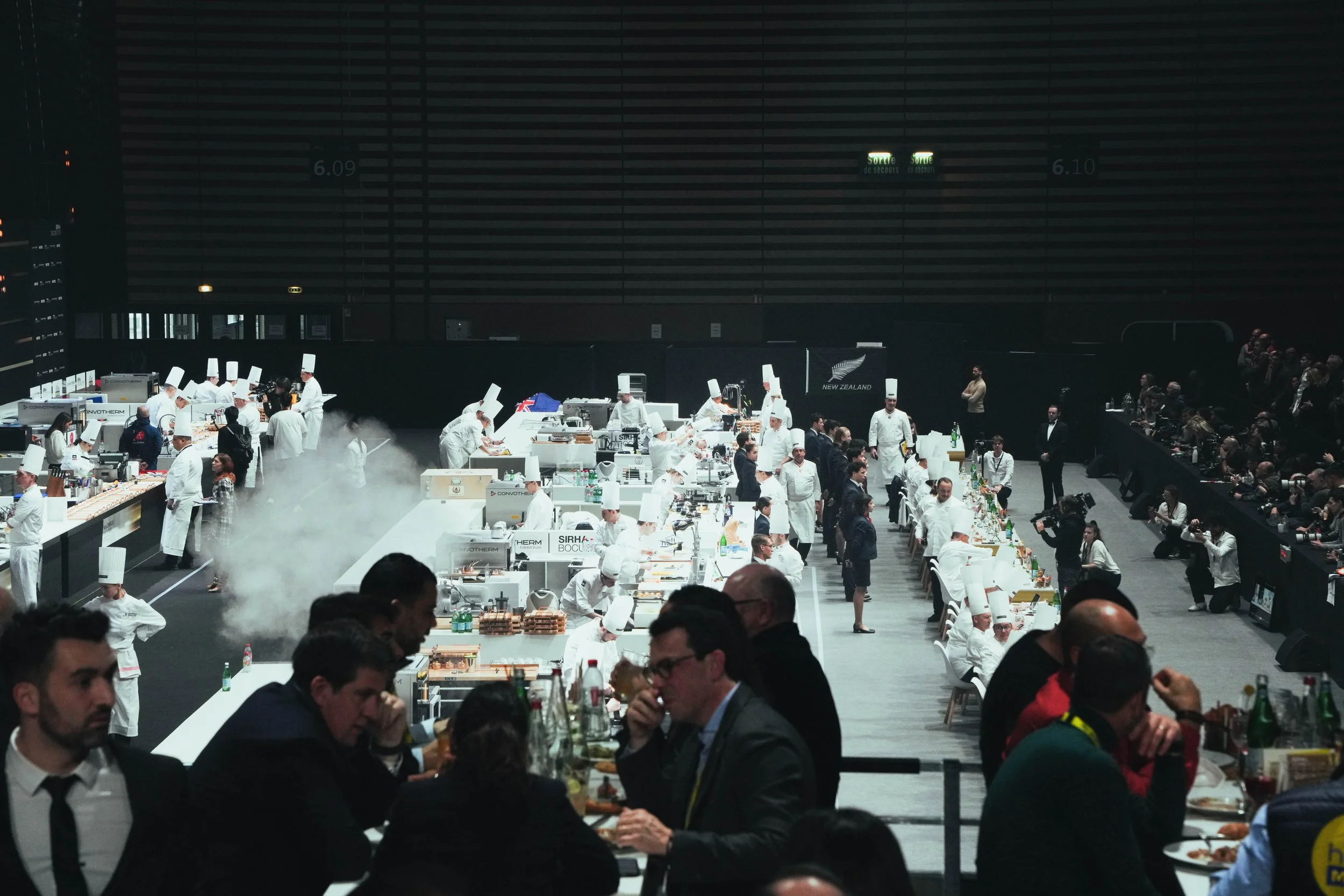
The Bocuse d'Or is to cooking what the Olympics is to sport. Held every two years in Lyon, France, it is the most watched, most contested, and most coveted culinary competition on earth — a five-and-a-half-hour live battle of skill, precision, and creativity, played out in front of thousands of spectators, the world's media, and the most influential names in gastronomy.
Founded in 1987 by the legendary French chef Paul Bocuse, the competition was born from a simple but radical idea: that cooking deserved the same stage, spectacle, and recognition as any world championship sport. Nearly four decades later, that vision has never been more alive.
The Format
24
Nations
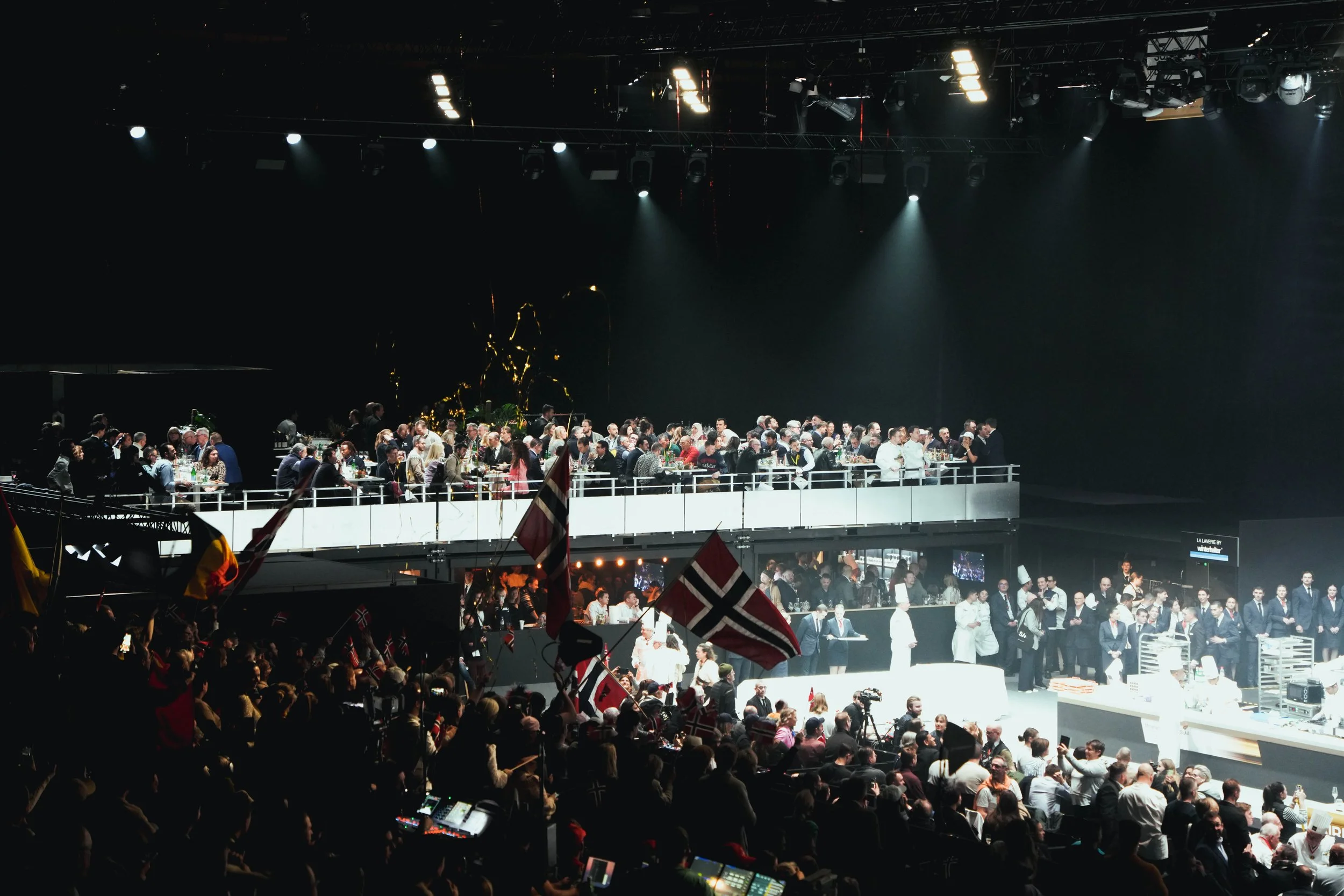
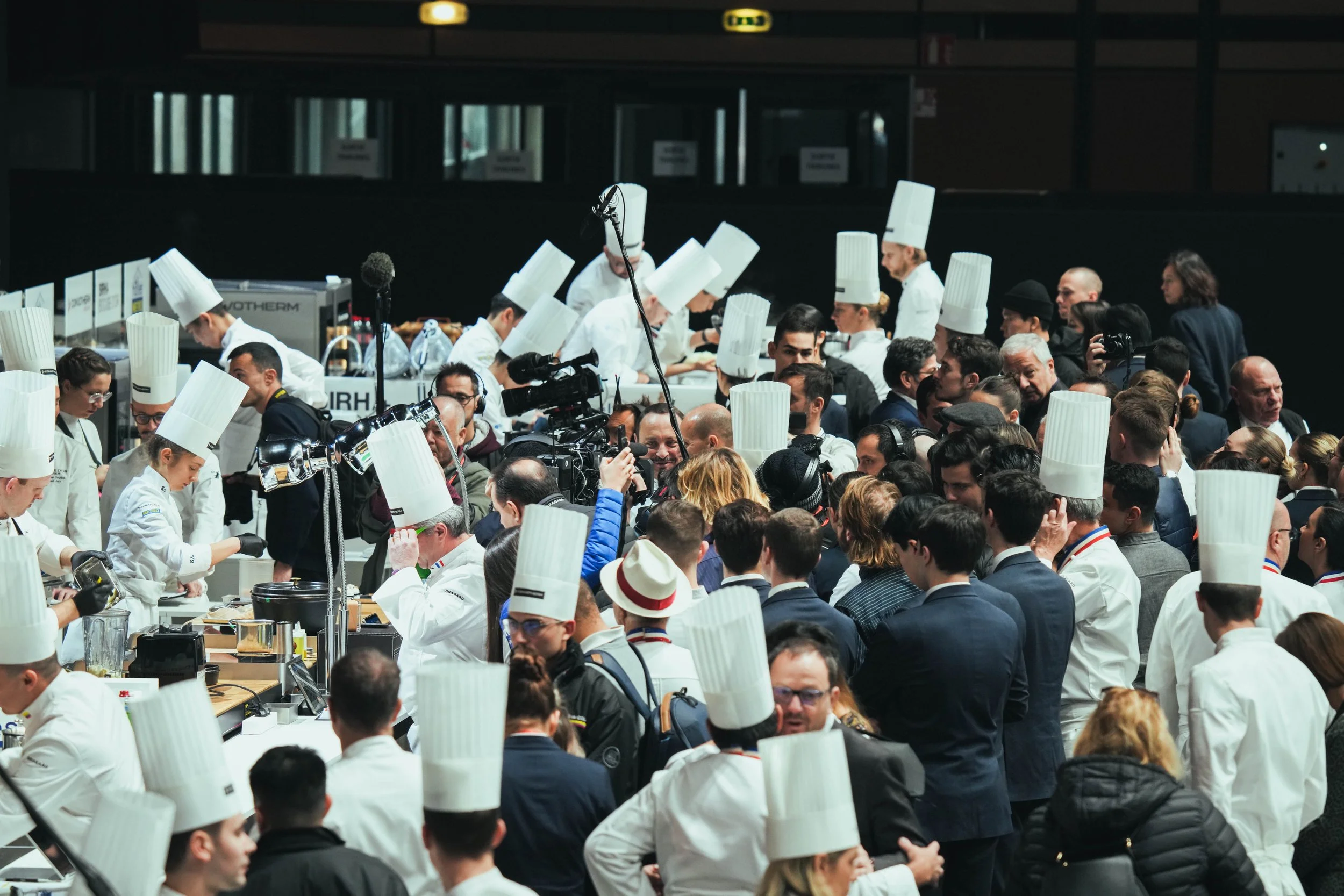
Each team — a lead chef and a commis no older than 22 — competes simultaneously in an open culinary theatre, their kitchen visible to the audience, the jury, and cameras broadcasting live across France and beyond. The atmosphere is electric: chanting, flags, drums. Think World Cup final, but the stadium smells extraordinary.
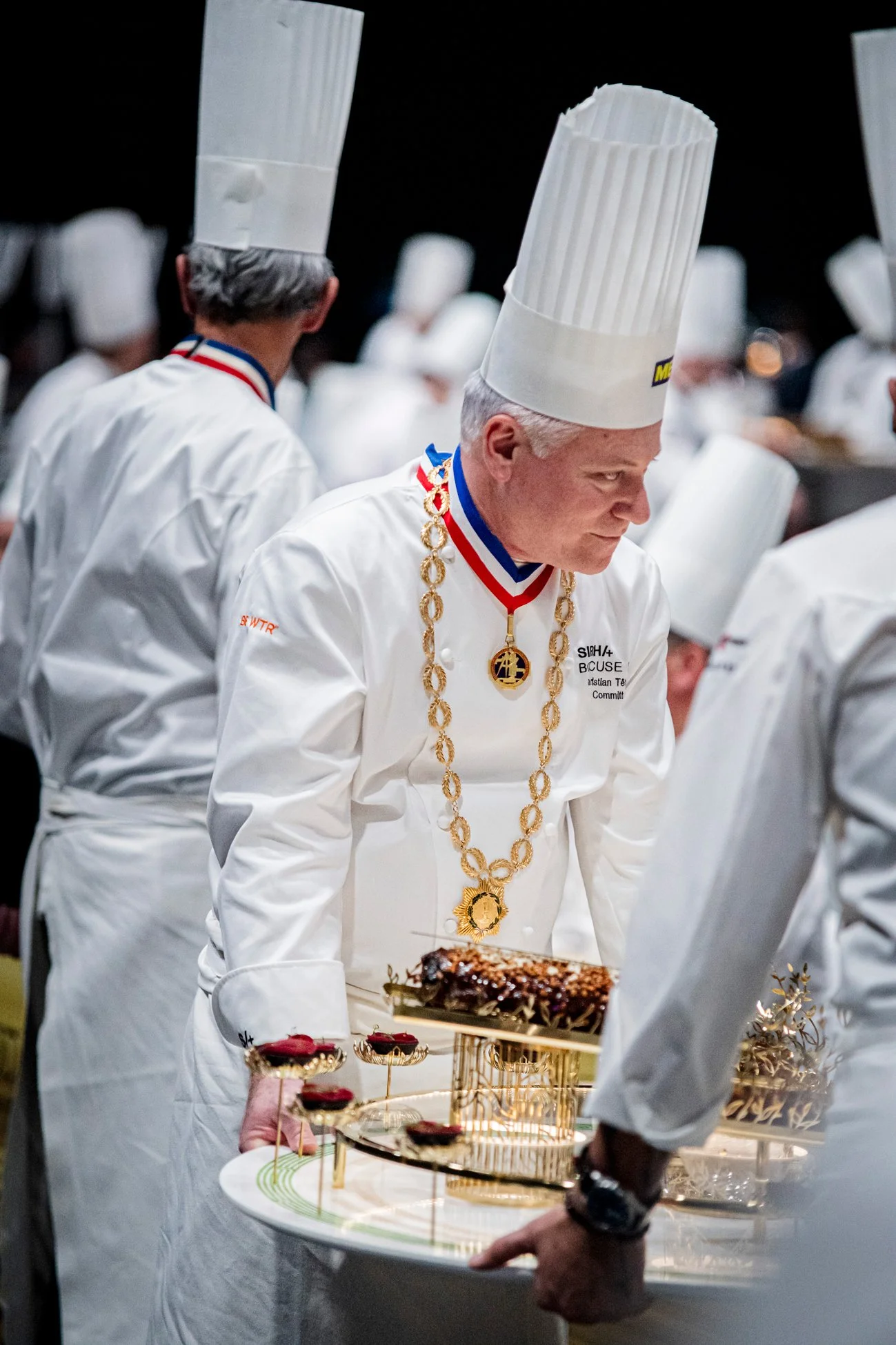
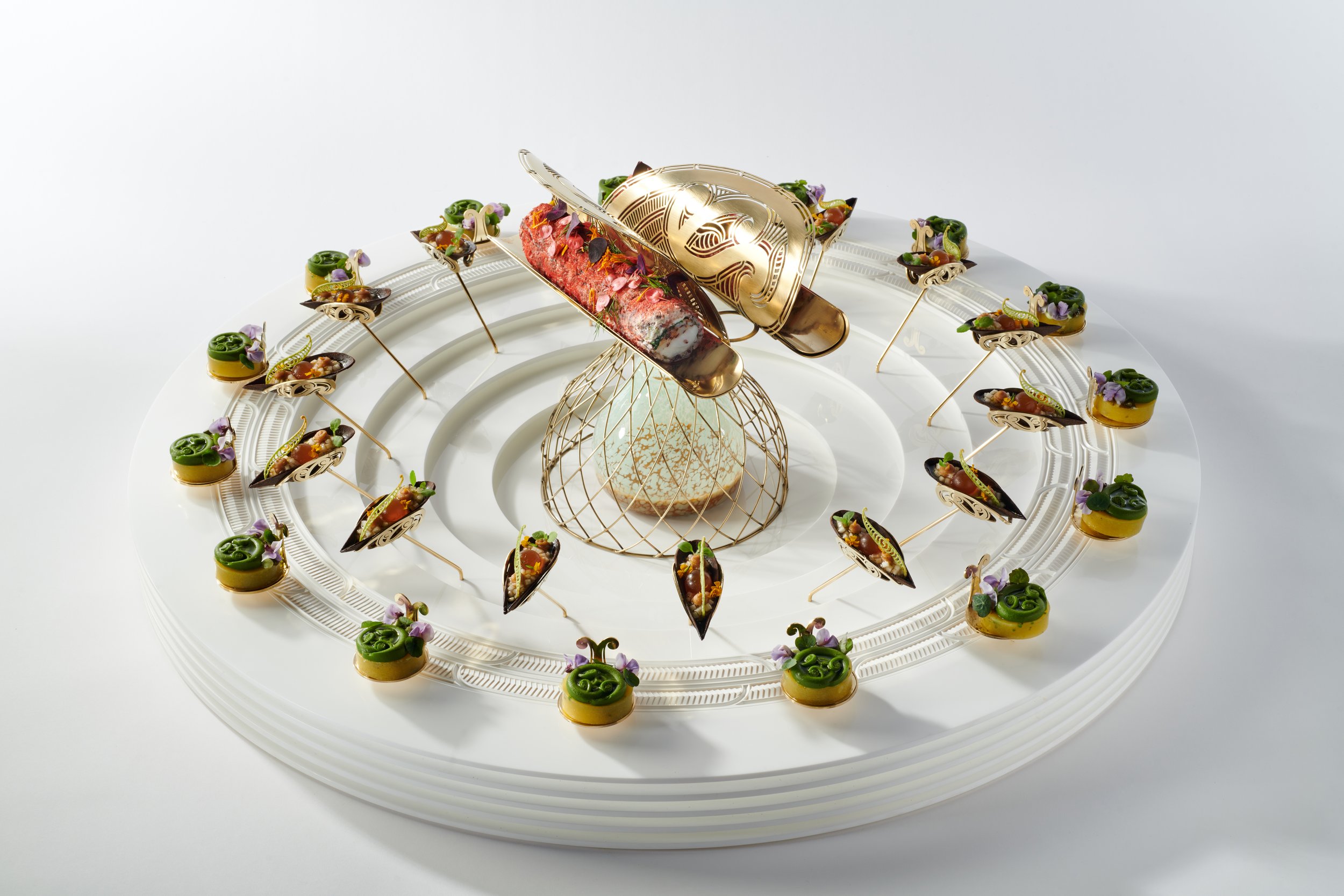
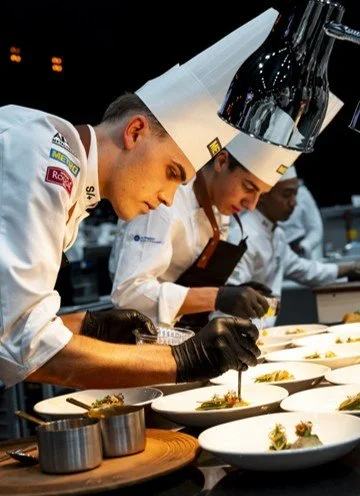
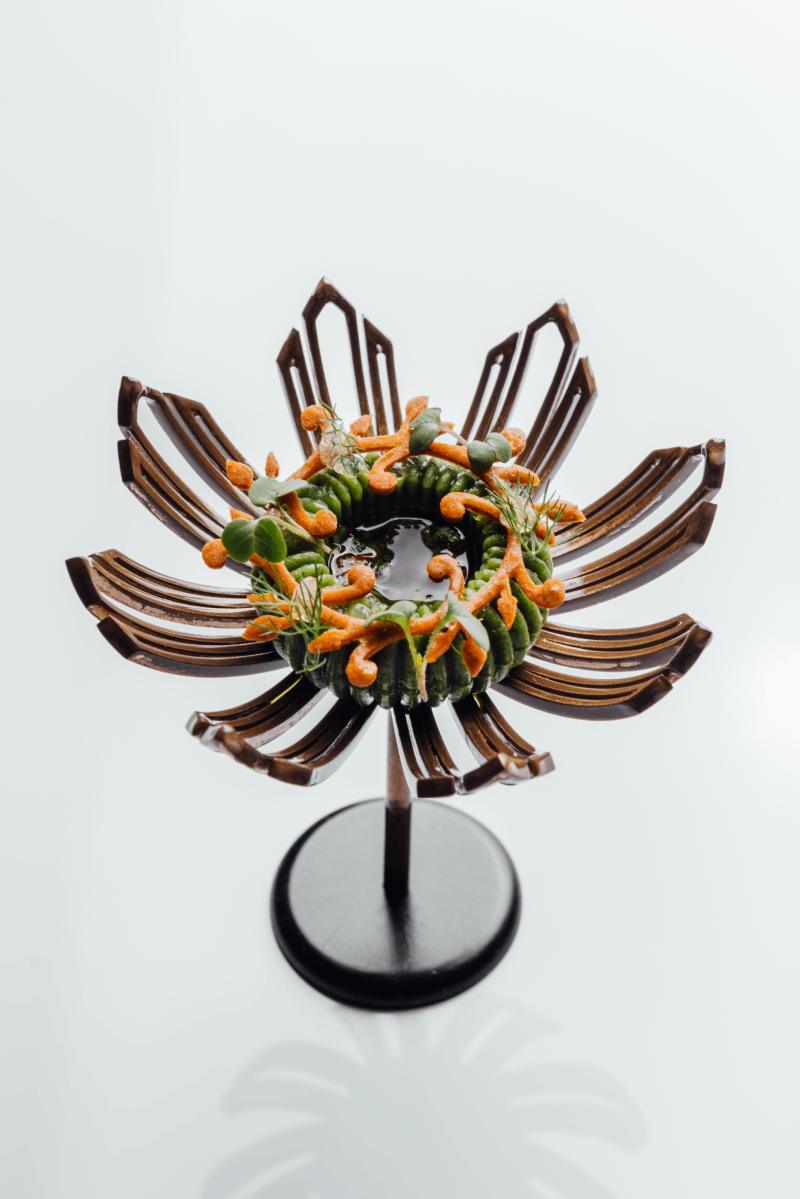
Teams present two elaborate dishes — one plate and one platter — judged on taste, technique, creativity, presentation, and the way they tell the story of their home country through food.
2
Challenges
5
Hours
35
Minutes
The Road to Lyon
Getting to Lyon is an achievement in itself. Over 60 countries hold national selection contests to select their lead chef, who then competes at a regional continental competition. The 24 grand finalists comprise the top five teams from Asia-Pacific, the top ten from Europe, the top five from the Americas, two from Africa, and two wild card entrants.
For New Zealand, that means first winning the right to represent the country nationally, then competing at the APAC Championship against the best teams across Asia and the Pacific — with only five places available for Lyon
New Zealand's History
New Zealand is new to this stage — and has already made history on it.
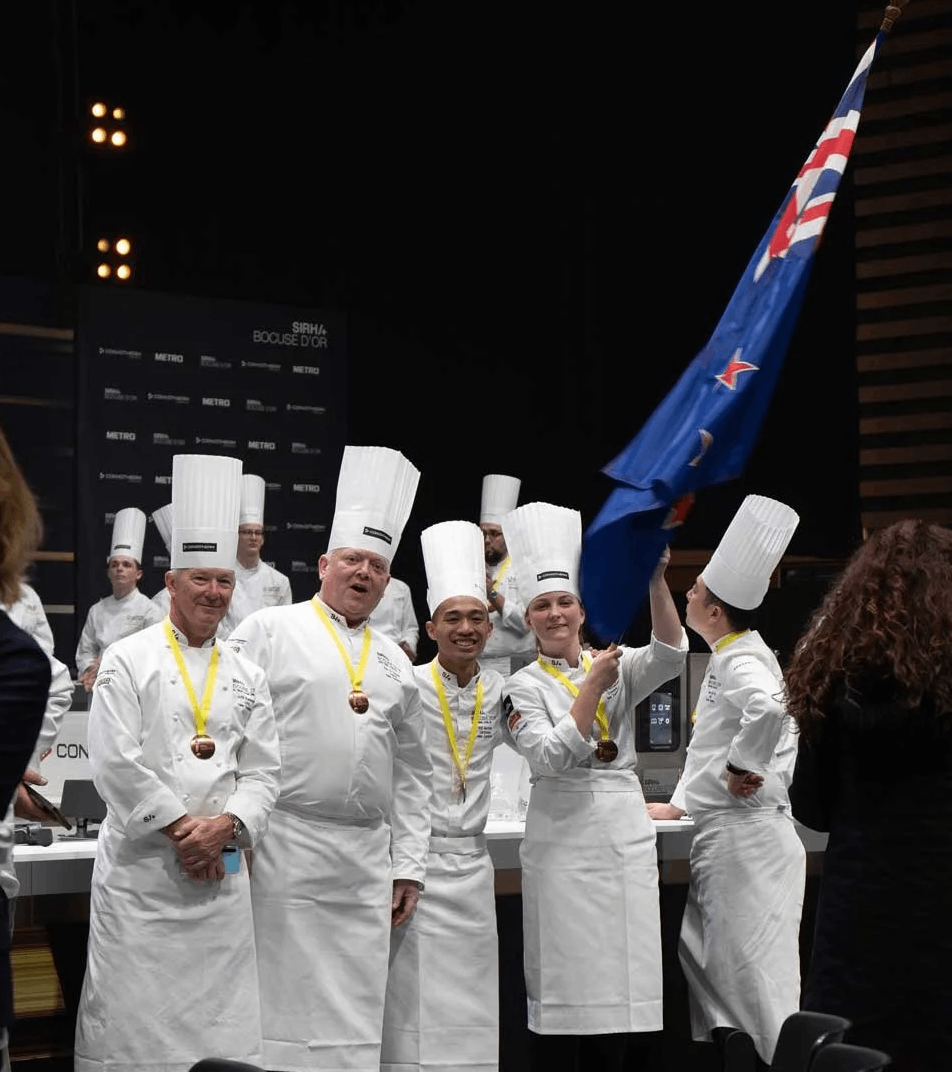
In 2022, Team New Zealand won the Asia-Pacific Regional Championship for the first time in the nation's history, earning their place at the Lyon World Finals. What followed exceeded every expectation. At their 2023 debut, Will Mordido and the team finished 15th in the world — the highest debut placement in the entire history of the Bocuse d'Or. French national broadcasters put New Zealand's chefs on prime-time television, introducing Aotearoa's culinary identity to millions of viewers across Europe.
Most nations take a decade to find their feet at this level. New Zealand did it first time out.
The second campaign built on that foundation. A 3rd place finish at APAC confirmed back-to-back qualification for the Lyon Grand Final.
Each cycle, the experience deepens, the ambition grows, and the team we send gets stronger. New Zealand has already proven it belongs. Now the goal is to climb.
“The cost of going is significant — but the cost of not being there is greater. The experience, exposure, and learning can’t be replaced. This is our chance to stand on the world stage and share our food, our chefs, our story. New Zealand belongs in global cuisine”
Why It Matters Beyond the Podium
The Bocuse d'Or isn't just about a trophy. When New Zealand competes, our produce is on the plate in front of the world's most influential food buyers, restaurant owners, and culinary media. Our ingredients — our lamb, our salmon, our honey — become part of a global conversation about what this country produces and what our chefs can do with it.
That story has value well beyond the competition itself.
Paul Bocuse
The Man Behind the Legend
More than a gastronomic competition the Bocuse d'Or is a platform for sharing and recognition, a celebration of technique, creation, and the values that shape tomorrow's Haute Cuisine and it was the dream of a legend.
There are chefs, and then there is Paul Bocuse.
Born in Collonges-au-Mont-d'Or on the 11th of February 1926, within a family of cooks from father to son since the 17th century, Bocuse's connection to food ran deeper than most.

His career began alongside Eugénie Brazier at her iconic restaurant, before he joined the great chef Fernand Point at La Pyramide — one of France's most famous restaurants — where he learned what would become his two most fundamental guiding principles: simplicity and a total mastery of different cooking methods.
He eventually returned home to take over the family restaurant on the banks of the Saône, transforming it into one of the most celebrated dining rooms in the world. From 1965, it held its three-star Michelin rating for a record 55 years.
Bocuse created the Bocuse d'Or in 1987 in order to broaden the public's understanding of the extraordinary dedication, hard work, practice and precision required to execute the very finest cuisine. His key innovation was simple but radical: in most cooking competitions at the time, the actual work of the chefs was done out of sight — it was only the end result that was judged. Bocuse envisioned a competition where the preparation was done in full view. The rest followed naturally. He wanted to bring chefs out of their kitchens behind closed doors, into the spotlight and onto centre stage.
What nobody quite anticipated was what the audience would do with that invitation. It was in 1997 that the Mexican delegation arrived with a mariachi band, foghorns, and cowbells — and in doing so, accidentally invented a tradition. The flags, the drums, the chanting that now defines the atmosphere of the competition — the comparisons to a World Cup final — none of it was planned. It simply grew, organically, from that moment. Paul Bocuse died in January 2018, aged 91. He passed away in the very room above his restaurant where he was born. The competition he created continues in his name, and in his spirit.